
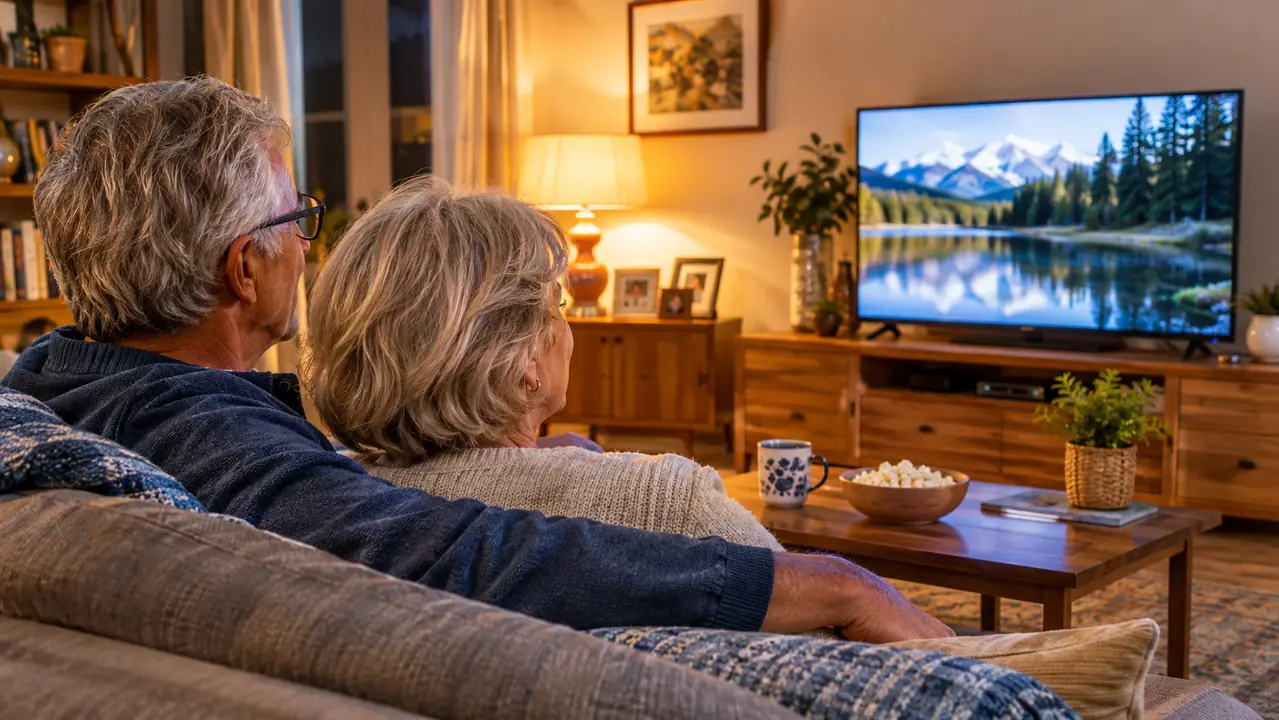
I spent the first three years of my hearing loss turning the volume up and the subtitles on. Sal would get up and leave the room. Not angry, just quietly, the way a man does when he has decided not to say something for the fourth time that week. Our family room is not complicated. There is a 50-inch TV on a low cabinet, a sofa about ten feet back from the screen, and a small kitchen just off it, where I do the crossword while he watches the Bills. That is the whole room. No second row of seats, no place to hide a bass unit, no wall I wanted to drill into. So when I started reading about soundbars, the ones with five speakers and a wireless subwoofer and a setup app that wanted my Wi-Fi password, I closed the tabs. What I wanted was narrower than all that. I wanted the words.
The Bose TV Speaker is the bar I bought, and after months of nightly use it is the bar I would buy again. Bose calls it an all-in-one soundbar. It is 23.38 inches wide, 2.21 inches tall, 4.02 inches deep, and it weighs 4.3 pounds. Inside are two angled full-range drivers, which is a plain way of saying two speakers, one per side, each handling the whole spread of notes rather than splitting high and low between separate speakers, and angled outward so the sound spreads instead of firing straight at the coffee table. I should say what I am and what I am not. I am a retired middle-school librarian, 31 years in the same building, with mild to moderate age-related hearing loss in both ears, diagnosed three years ago. I am not an audiologist and this is not a hearing aid. If your hearing has changed and you have not had it tested, get tested first. Then come back and read about speakers.
The Quick Verdict
Made dialogue followable at ten feet without subtitles, from a bar the width of a serving platter. Bass is the trade, and it is a fair one for a TV room.
Amazon Check Today's Price →The Mumbled Dialogue Fix Is 23.38 Inches Wide
Two angled full-range drivers, HDMI ARC so the TV remote does the work, and buttons you can find by feel in a dark room. Today's price is on the Amazon listing.
Amazon Check Today's Price on Amazon →How I've Used It
The bar sits centered on the same low cabinet as the TV, directly under the screen. It does not span the width of a 50-inch television, and that took me one evening to stop noticing. It is 4.3 pounds, so it is not going to wander, and the plastic enclosure wiped clean with a damp cloth after a grandchild put a sticky hand on it. Bose lists wall mounting as an option. I did not use it. I have drilled enough holes in this house.
Our evenings are predictable, which makes them good for testing. Sal watches the Bills from September until the season ends, and I read through it. I watch British mysteries, the ones where everyone murmurs in a vicarage kitchen with a radio going in the background. We both watch cooking shows, which are the hardest test of all, because a host talks while a stand mixer runs and a pan sizzles and music plays underneath. Between September and now we have run that rotation most nights of the week. I keep notes. It is a librarian habit and I am not apologizing for it.
The measure I care about is simple: how many evenings did I turn on the subtitles out of necessity rather than habit? In the first month, four. In the most recent month, it was two, and both were British mysteries with a whispering scene in a garden. Before the bar, it was every night, and the volume was at a level that made Sal leave the room. That is the whole review in two sentences. Everything below is the detail behind it.
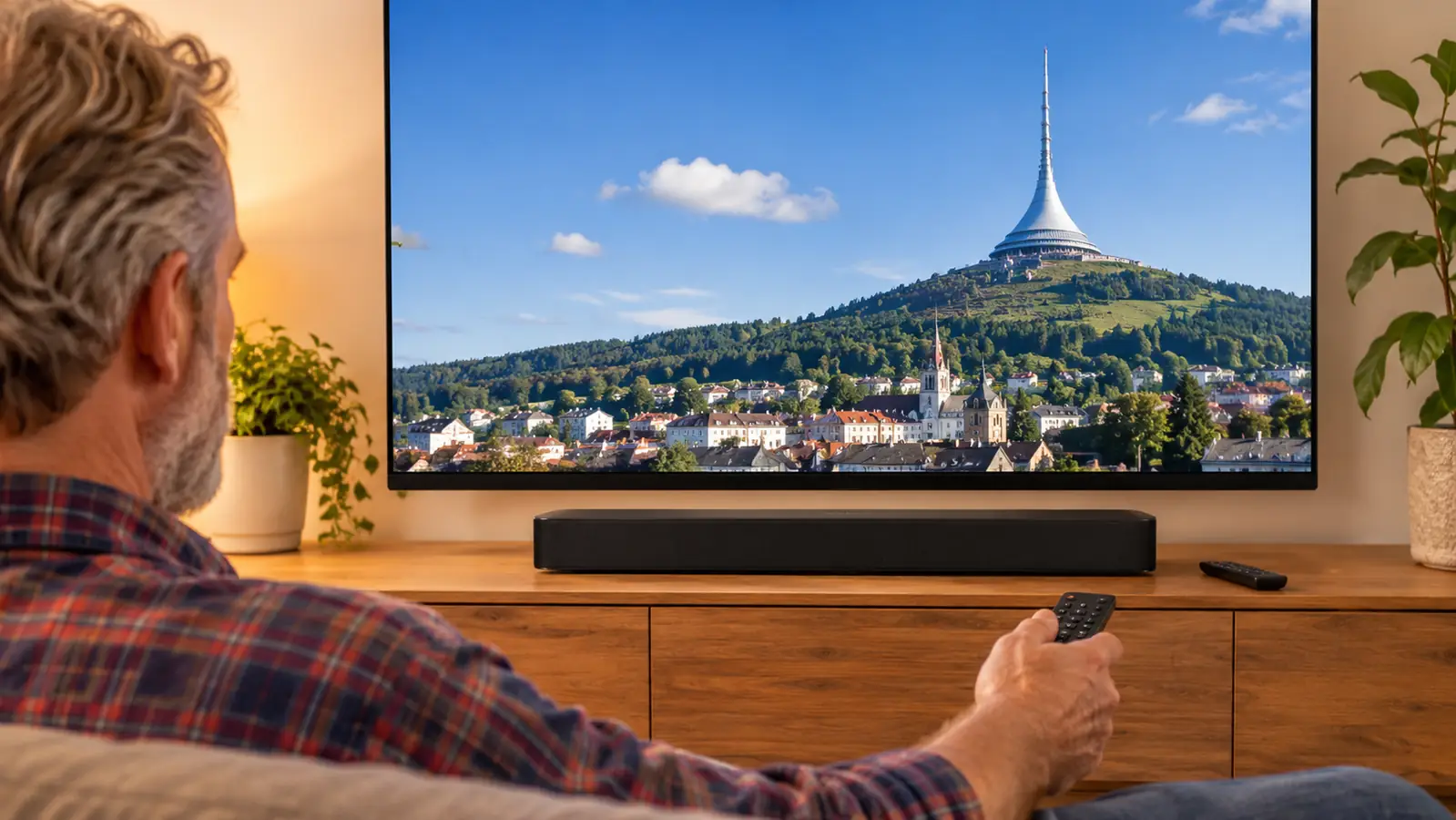
What It Actually Fixes: Dialogue at Ten Feet
The thing that changed was not loudness. It was where the voices sit. On the television's own speakers, dialogue arrived as a thin strip of sound coming from behind the screen, and anything underneath it, music, crowd noise, a pan hitting a stove, landed on top of it. Sal could follow that. I could not. My hearing loss takes soft voices and fast dialogue first, and it takes them worst when something else is playing at the same time. So the television was not too quiet. It was too crowded.
The Bose TV Speaker separates that crowd. The listing describes the bar as clarifying speech, and that is an accurate description rather than a marketing flourish. Voices come forward and the room noise sits behind them instead of on top, and because the sound is coming from a bar below the screen rather than from behind the glass, my ears have something to aim at. I do not have a clever technical explanation for why that helps. I have a practical one, which is that I stopped leaning forward.
It plays in stereo, which is the right ambition for a room this size. I am not expecting the Bills to sound like I am in the stadium, and I would be annoyed if it tried. What I wanted was to hear the announcer over the crowd, and I get that. Sal wanted to hear the whistle before the play was over. He gets that too, and he has stopped reaching for the volume button, which is the closest thing to a compliment this household offers.
In the first month I needed subtitles four nights. In the most recent month, two. Before the bar it was every single night, at a volume that emptied the room.
The Setup Took One Evening, and I Read the Manual Twice
I read instruction manuals cover to cover. That is who I am. This one is short, and the reason it is short is that there is not much to configure. The bar takes HDMI ARC, optical, AUX, and Bluetooth. ARC stands for Audio Return Channel, and plain English for that is: one cable carries the sound out of the TV and into the bar, and the TV's own remote then controls the volume. I ran the cable from the ARC port on the back of the television to the bar and that was the entire installation. If your television is older and has no ARC port, optical is the fallback, and there is an AUX input after that.
The remote is small and the buttons are simple. Power, volume, and switching between the television and whatever else is paired. I use it for volume and for moving over to my phone, and I have never needed a third thing from it. There are buttons on the unit itself as well, which matters more than it sounds, because Sal has mislaid the remote twice and both times we kept watching.
My one note for anyone setting this up: do the cable work before you sit down for the evening, not during. I did it on a Tuesday afternoon with the manual open on the floor, took about twenty minutes including finding the flashlight, and by that evening we were watching a David Suchet mystery with the subtitles off. If I had tried to do it at eight in the evening with Sal waiting, it would have taken four times as long and ended in a discussion.
Bluetooth, Music, and the Sunday Afternoon Test
The bar pairs over Bluetooth 4.2 and holds up to three devices at once. In practice that means my phone, Sal's phone, and whichever grandchild has claimed the pairing on a Sunday. I use it more than I expected to. I put on a podcast while I am doing the books for the church library and it fills the family room better than the little speaker in the kitchen ever did, and I do not have to raise my voice over it when Sal comes through.
Music is where the honest limits show. Two full-range drivers in a plastic bar that weighs 4.3 pounds will give you clear midrange and voices you can pick out of a mix, and they will not give you bass you feel. A choral recording sounds clean. A record with a real low end sounds like a polite version of itself. I am not the person who was going to notice this, and I noticed it anyway.
The Sunday test is the one I did not anticipate. Two grandchildren, a phone, and a request. The bar handled it without complaint, switching over from the television in a moment, and when they left I switched back. It has never once failed to reconnect, which after several months of this is the sort of small reliability that stops registering until something else in the house breaks.
Where It Falls Short
Bass is the obvious one and I will not dress it up. There is no separate subwoofer and nothing in this bar pretends to be one. An action film sounds thin next to a system with a bass unit, and if your evenings are mostly explosions you will be disappointed. Our evenings are mysteries and football, so I am not, but that is luck rather than judgment.
At 23.38 inches it cannot throw a wide stereo image across a 50-inch screen. The sound comes from a strip below the television rather than from the corners of the room. For dialogue this is fine, and for someone sitting where I sit, ten feet back and slightly off center, it is more than fine. If you have a wide room with seats spread out, you will hear the difference between sitting in the middle and sitting at the end of the sofa.
And the honest limit that matters most to me: a genuinely whispered scene still needs the subtitles, at least on British mysteries. The bar brings voices forward. It cannot manufacture clarity that the recording did not put there. I have made my peace with two nights a month. If you are expecting zero, you will be disappointed, and no soundbar I have tried would have gotten you to zero either.
What I Liked
- Dialogue comes forward at ten feet without raising the volume to a level that empties the room
- 23.38 inches wide and 4.3 pounds, so it sits centered on a low cabinet without overhanging
- HDMI ARC means one cable and the television's own remote handling volume
- Bluetooth 4.2 with three paired devices, so phones and grandkids swap in without fuss
- Simple remote and buttons on the unit, nothing to configure and no account to create
Where It Falls Short
- No real bass. Action films sound thin compared with a bar that has a separate bass unit
- The plastic enclosure feels lighter in the hand than the rest of the product suggests
- At 23.38 inches it cannot spread sound wide across a large screen or a wide seating area
- Whispered dialogue still needs subtitles, roughly two nights a month in our house
- The remote is small enough to lose in a sofa cushion, which has happened twice
Who This Is For
This is for the person who turns the television up and still misses the words. If your hearing has shifted in the way mine has, where soft voices and fast dialogue and anything with music underneath is the first thing to go, this bar addresses that specific problem in a room of ordinary size. It is also for the household where one person hears fine and the other does not, because the volume can come down to a level you both tolerate. That second part is worth more than I expected. Sal has not left the room in months.
It is also for anyone who does not want a project. One cable, one evening, no app, no account, no calibrating microphones around the room. If you are the sort of person who reads the manual once and wants to be finished, this is that kind of product. It also helps if your room is small or awkward, as ours is, with a sofa ten feet back and a kitchen just off it. A bar this size fits a room like that without rearranging anything.
Who Should Skip It
Skip it if you want a home theater. If your evenings are films with a real low end and you want to feel the room shake, this bar will not do it and you will spend the whole time noticing what is missing. Look at a system with a separate bass unit and be prepared to find a place to put it. That is a different purchase with a different footprint, and it is not this one.
Skip it, too, if what you actually need is a hearing test. I mean that sincerely. A soundbar clarifies a television. It does not correct a hearing loss, and if you are cupping your hand to your ear during conversation or asking people to repeat themselves at the dinner table, a speaker is not the answer to that question. Get tested. Then come back and buy the bar for the television. That is the order I would do it in, and it is the order I would tell a friend.
If You Have Been Reading Subtitles for Three Years, Start Here
One bar, one cable, one evening of setup. It sits on a cabinet at 23.38 inches wide and 4.3 pounds, and the television's own remote runs the volume. Today's price and the return window are both on the listing.
Amazon Check Today's Price on Amazon →