

Sal and I have been married forty-one years, and for the last three of them we have had the same small standoff every evening around eight. He picks up the remote and turns the volume to 42 and looks at me. I say it is too loud. He turns it to 36 and says he can hardly hear it. Then we both sit back, and I still miss half the dialogue in whatever British mystery we are halfway through. That standoff ended in March, the week a SEREONIC wireless TV speaker took up residence on the arm of our sofa.
I am Rosalind Ferraro, sixty-six, a retired middle-school librarian in Rochester, New York, thirty-one years in the same building. I have mild to moderate age-related hearing loss in both ears, diagnosed about three years ago, and I do not wear hearing aids yet. What I lose first is not volume. It is soft voices, fast dialogue, and anyone speaking while music plays underneath. A television can be loud enough to rattle the windows and still be mush to me. Loud and clear are two different things, and it took me a long time to stop arguing with that.
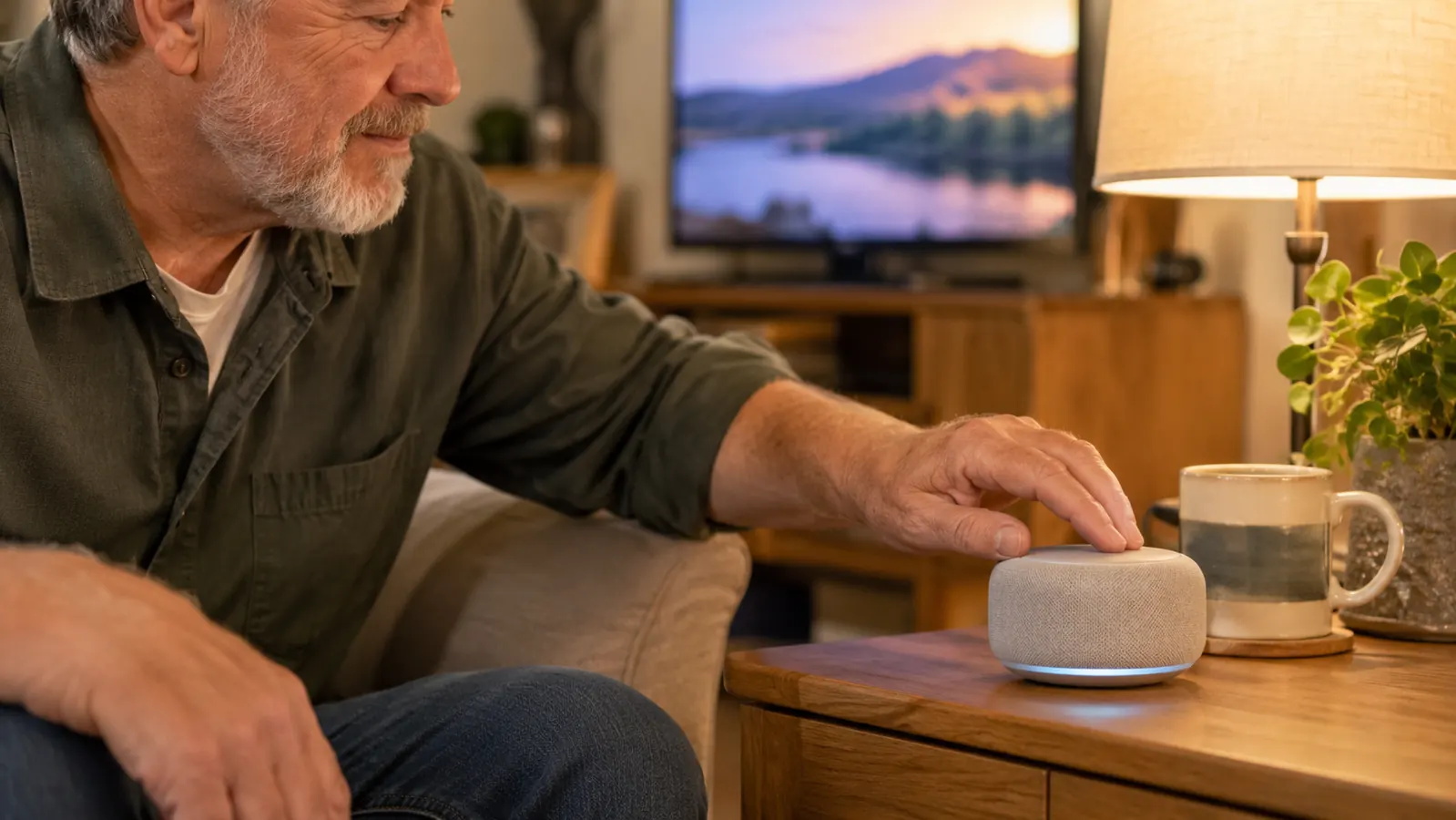
I am not going to pretend I fixed this with willpower. What worked is not a louder speaker. It is a closer one. The SEREONIC portable wireless TV speaker is a small tabletop unit, 8.8 inches wide and 7 inches tall, that plays the television's audio in stereo from about eighteen inches from my left ear. That is the whole idea, and it is the only idea in this piece that mattered.
Before this, we tried the obvious things. Subtitles work for me and drive Sal quietly around the bend. A pair of wired TV headphones helped a great deal, but they come with a cord across the family room floor and they shut Sal out of the room entirely; he would tap my shoulder with a question and I would have to take them off, and by then we had lost the thread of the show. A soundbar made the explosions enormous and left the quiet conversations exactly where they were. None of that was wasted money, exactly. It just was not solving the problem I actually had.
Setup took about twenty minutes, most of it spent reading the manual twice because I am that person. A small base connects to the television's audio output using RCA, a 3.5 mm aux cable, or a digital connection, whichever your set offers, and sends the sound to the speaker wirelessly. The speaker runs on battery, which is why I can carry it from room to room, and the volume is adjusted by touch on top of the unit. The published range is 100 feet. Our family room is ten feet from the sofa to the screen, so range was never going to be my problem, but I have made tea during a Bills game with the speaker on the kitchen counter and never lost the sound.
A television can be loud enough to rattle the windows and still be mush to me.
The problem was never volume. It was distance.
The SEREONIC wireless TV speaker plays your television's audio in stereo from a tabletop unit you can set right beside your chair. Touch controls, battery powered, 100 foot range, and RCA, aux or digital hookups.
Amazon Check Today's Price on Amazon →The first week, we rewatched a detective series we had already seen twice, which turned out to be a fair test. There is a scene in a pub where three people talk over one another with music underneath, and I had never once understood that scene. I understood it on the second night with the SEREONIC speaker sitting by my elbow. I did not ask Sal to repeat a line, and he watched at volume 26, which is where he actually likes it. He also stopped bracing himself when the theme music came on, which I had not realized he was doing.
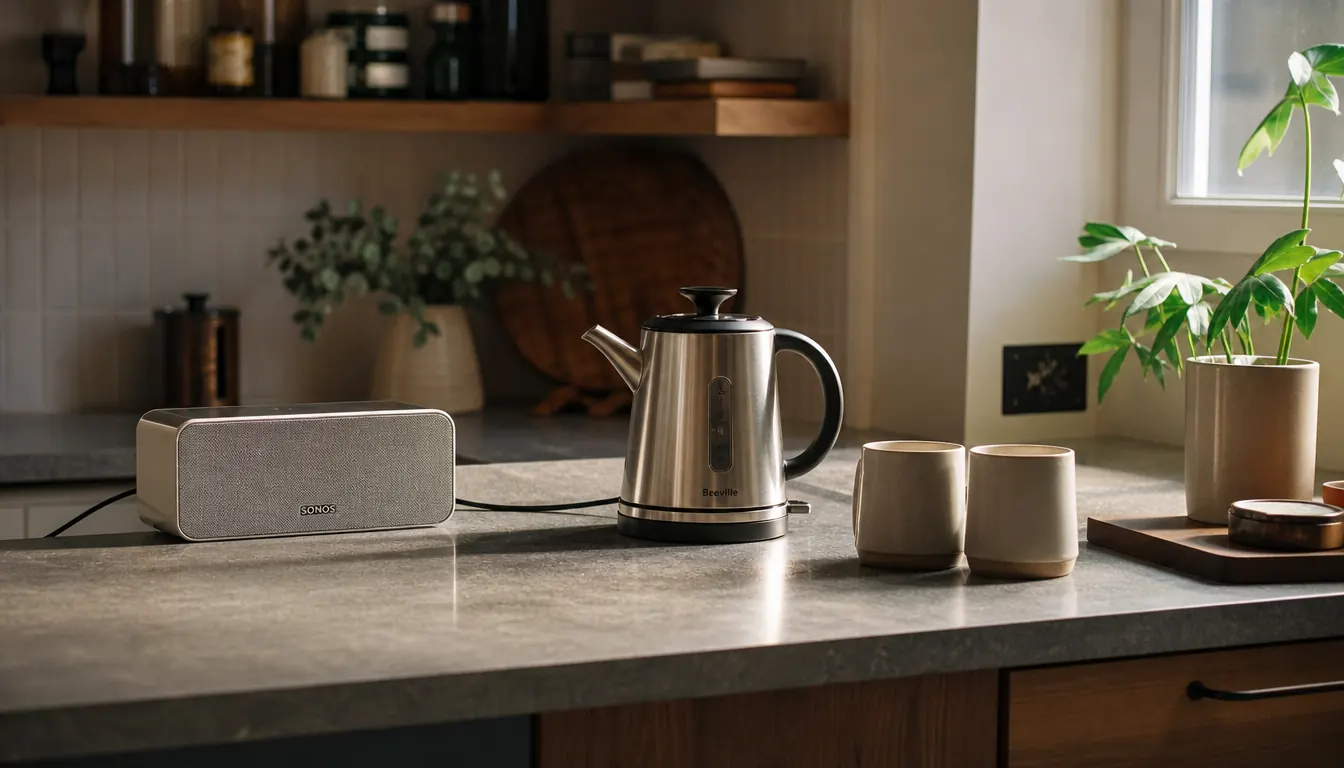
The numbers, for anyone who wants them: two five-watt Class D speakers, stereo output, with a two-inch subwoofer, in a plastic enclosure that weighs 1.7 pounds. On paper that is modest. In a family room, what it means is that voices come through cleanly and background music does not collapse into noise. I notice the stereo most during football, when the crowd sits on one side and the announcers on the other. I watched for lip-sync drift for the first two weeks, since the listing advertises zero audio lag, and I have not caught any.
Three things I would want a friend to know first. It is a speaker, not a hearing aid, and it has not made my ears any better; it has made the sound closer, which is a different thing entirely. The touch panel on top is sensitive, and I turned it down by accident twice in the first week before I learned to use a lighter finger. And it cannot rescue a badly mixed show. If the dialogue was buried in the original recording, you will still be reaching for subtitles now and then, same as before.
Sal's opinion, offered without my asking, is that he likes it more than I do. He watches at a volume that does not hurt his ears, and he no longer leans over to ask whether I caught that. The standoff at eight o'clock is over. We just watch the show now.
What I'd Tell You If We Were Sitting at My Kitchen Table
I would tell you to get your hearing tested before you buy any gadget at all, because I put mine off for two years and I wish I had not. I would tell you that the SEREONIC speaker is a bridge and not a cure, and that a bridge is worth having while you decide about hearing aids. I would tell you to move it around for a week before you make up your mind, because eighteen inches from my ear worked better than three feet on the end table did, and the difference was not subtle. And I would tell you the goal was never to hear the television. The goal was to stop negotiating about it every single night.
Start with where you sit, not how loud it goes.
A tabletop speaker beside your chair, battery powered, 100 feet of wireless range, touch controls, and RCA, aux or digital hookups. The least dramatic fix in our house, and the one that worked.
Amazon See the SEREONIC TV Speaker on Amazon →