

I bought the Bose TV Speaker on a Tuesday afternoon in March, and I want to be honest about the reason. It was not a love of audio equipment. It was that Sal had started leaving the room halfway through the second act of every British mystery we watch, and I had started pretending to follow plots I was only half hearing. He would come back with a glass of water, ask what he had missed, and I would have to admit I did not know. That is where this review starts.
I am 66, a retired middle-school librarian in Rochester, New York, with mild to moderate age-related hearing loss in both ears, diagnosed about three years ago. I do not wear hearing aids yet. What I lose first is soft voices, fast dialogue, and anyone speaking while music plays underneath. Television puts all three in the same room at once. So this is not a review from a sound engineer. It is a report from the sofa, about ten feet from a 50-inch screen, on what the Bose TV Speaker actually changed in this house and what it did not.
The Quick Verdict
It clarified dialogue in my family room more than any television setting I tried, and it did it with one cable. It will not rescue a muddy scene, it needs an outlet, and it hands you a second remote to keep track of.
Amazon Check Today's Price →The second act, at a volume Sal can live with
One cable from the television, speech that sits in front of the music instead of under it, and no more rewinding to catch a line. That was the entire reason I bought it.
Amazon Check Today's Price on Amazon →What Nobody Tells You Before the Box Arrives
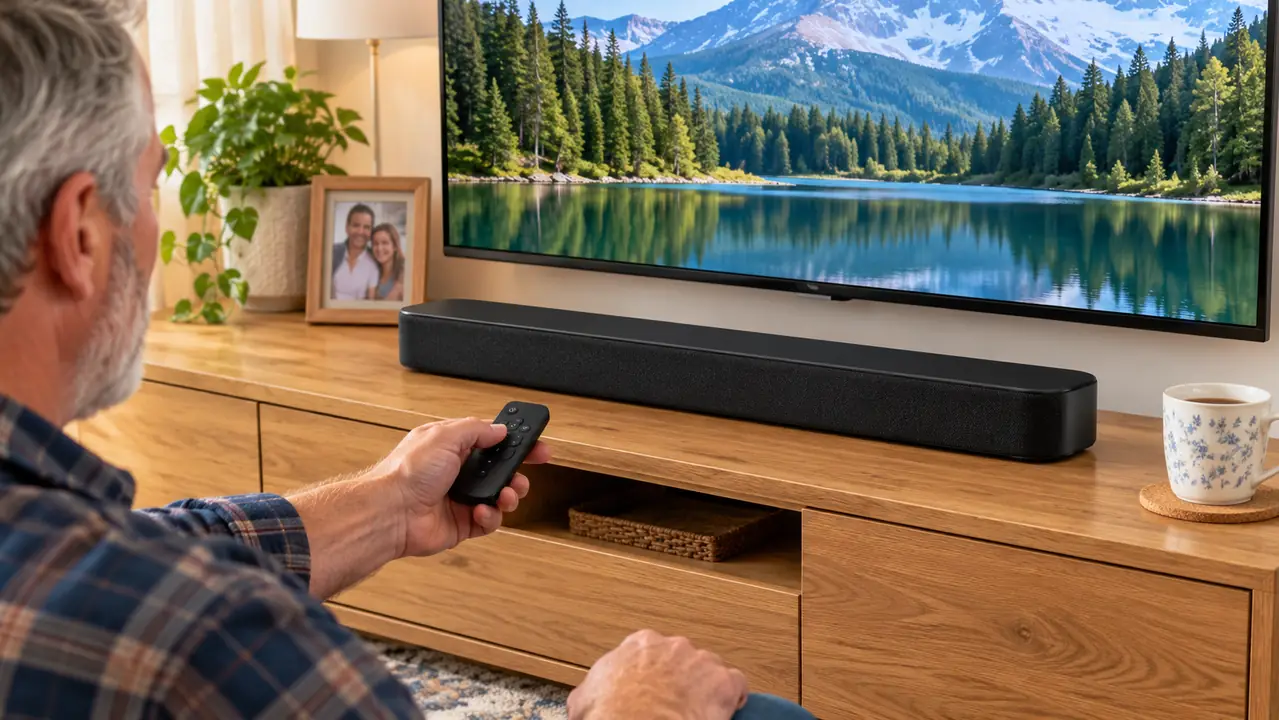
The first surprise is size. The Bose TV Speaker measures 23.38 inches wide, 2.21 inches tall and 4.3 pounds. In photographs it reads as a plank; in my family room it sat under the front edge of the television on the low cabinet and all but disappeared. I had cleared a generous space for it and did not need to. If you are picturing something that visually fills the width beneath a large screen, measure your cabinet first. This is a compact soundbar and it looks like one.
The second thing is that it is a corded speaker. There is no battery and no charging, which sounds obvious until you are standing in your family room looking for an outlet that is not behind the sofa. Mine is on the wall to the left of the cabinet and the cord reaches, but I would have liked to know that before I started moving furniture. Plan for power the way you plan for the television's own cord, and check the reach before the box arrives.
The third thing, and the useful one, is the set of connections. There is HDMI ARC, an optical input, an AUX input, and Bluetooth 4.2. The Bluetooth side pairs with up to three devices, so my phone, Sal's phone and the tablet the grandkids use on Sundays can all be remembered by the speaker. I did not expect to care about that. I care about it more than I expected, mostly for podcasts at the kitchen end of the room while I am doing dishes.
The One-Cable Setup, and the Setting Nobody Mentions
HDMI ARC stands for Audio Return Channel, and in plain words it means one cable between the television and the speaker carries the sound out and lets the television's own remote control the volume. That is the whole appeal. I am not a person who wants a diagram taped inside a cabinet door.
The speaker offers more than one way in, and I tried two of them. I started with the optical input, because a previous television in this house had used one and I assumed the familiar path would be the easy one. Optical carried the sound perfectly well. What it did not carry was the television's volume commands, so I was back to two remotes and a small negotiation every evening. That is what sent me to the HDMI port, and I have not touched the optical cable since. If your television has an HDMI ARC port, use it. If it does not, the optical input is there and it works; you will just want to keep the Bose remote within reach.
I read the manual cover to cover, which is who I am, and the manual is short and clear. The step that tripped me up was not in the box at all. My television had to be told, in its own sound menu, to send audio out through the HDMI connection rather than through its internal speakers. Until I changed that, the Bose speaker sat there doing nothing and I sat there feeling foolish. Fifteen minutes of poking through the television menu fixed it for good.
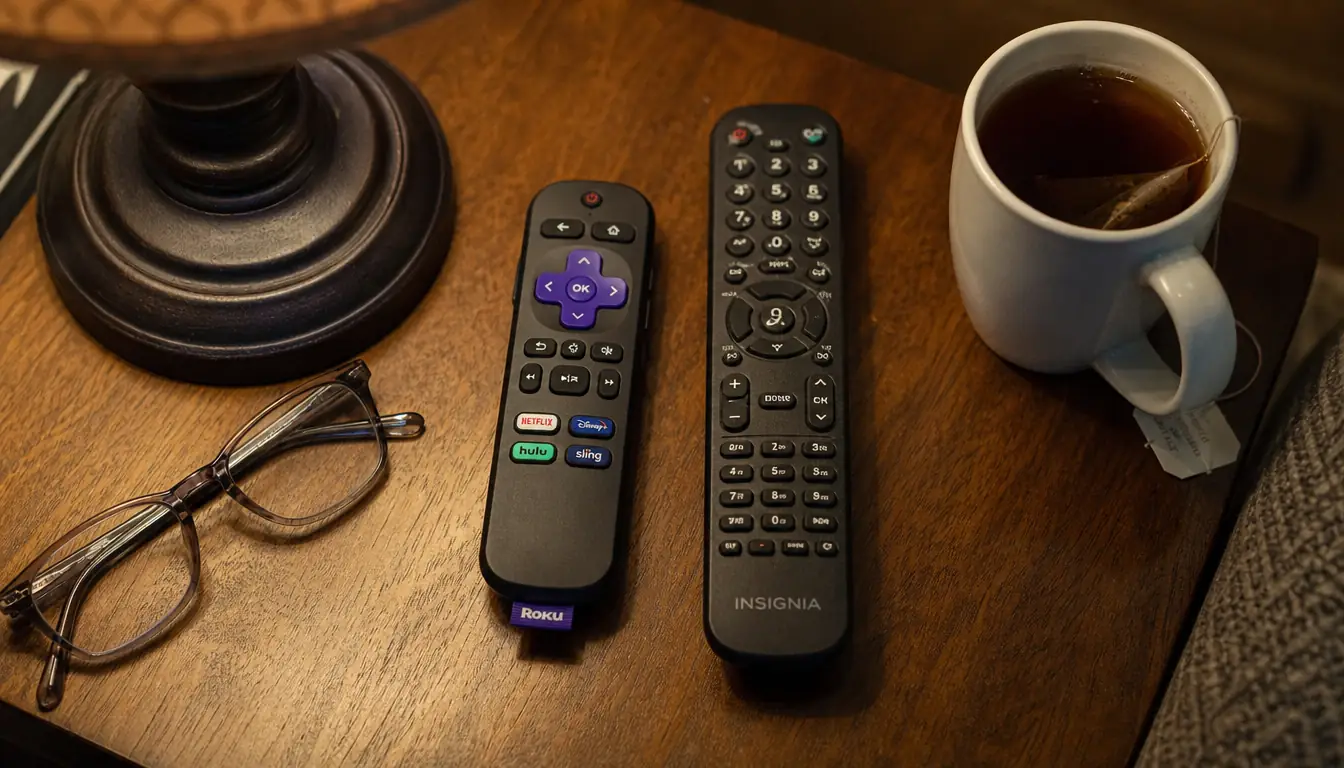
After that, the daily experience is genuinely one remote. The television remote raises and lowers the volume and the speaker follows without argument. The small remote that comes in the box went into the drawer with the others, and I will come back to that drawer later, because it is part of the honest version of this story.
What It Actually Fixed in My Family Room
Here is what I tried before I bought anything, and why none of it held. First I raised the television's own volume, which worked until Sal started wincing and the commercials started shouting. Then I went into the television's sound menu and turned on the dialogue setting, which is meant to lift voices above the rest of the mix. It helped a little on the news and almost nothing on a drama, because it lifts everything in the midrange and a cello lives in the midrange. I also tried sitting closer, which lasted one evening before my back registered a complaint. The speaker was the fourth thing I tried and the only one that stayed.
The product description says the speaker clarifies speech. That is a vague phrase, and it turned out to be the accurate one. Two angled full-range drivers sit inside the cabinet, and whatever they are doing in there, the effect in my room is that voices arrive in front of the background music instead of behind it. Not louder, exactly. More forward. I noticed it in the first ten minutes, on a show I had already given up on.
The test I keep coming back to is a detective series where half the cast murmurs in a kitchen while a radio plays. Before, I would catch one word in four and fill the rest in from context, which works right up until it does not and you realize you have been watching the wrong suspect for an hour. With the speaker in place I followed the scene. Sal stopped asking me to turn it up. Nobody in this house has said the words what did he say in three months, and that used to be a weekly event.
One evening in early April makes the case better than any description. We were three episodes into a series about a small-town newspaper, and there is a scene where four people argue in a newsroom while a police scanner crackles on a desk in the corner. I had watched that scene twice before, on the television's own speakers, and both times I came away with the general shape of the argument and none of the details. The third time, with the soundbar doing the work, I caught the name of the person they were arguing about. Sal looked over at me. I said the name out loud, and he laughed, because he had known it all along.
Football is a different problem, because crowd noise is a wall. The announcers came through more cleanly than they had, but I want to be careful here. A speaker clarifies; it does not separate. When the stadium is roaring I still lean forward, and I still miss a call now and then. It is better. It is not a broadcast booth of my own.
I stopped reaching for the volume during dialogue and started reaching for it during commercials. That is the whole change, and it is not a small one.
The Annoyances, Ranked by How Much They Bug Me
First, and this is the one I would put on a card inside the box: it is not a cure. A quiet conversation in a kitchen with the kettle running is still lost to me. A whispered line in a dark hallway is still a whispered line in a dark hallway. What the speaker does is improve the ordinary case, the scene where people speak at a normal level over a normal amount of music. The hard cases stay hard, and anyone telling you otherwise is selling something.
Second, the remote situation. The Bose remote is small, pleasant to hold, and completely redundant once the television remote is doing the work. It is not a flaw exactly, since the speaker needs its own remote for anyone connecting by optical or by Bluetooth. But it is a fourth remote in a house that already had three, and it lives in the drawer now with the others. I would rather the box had included a note saying you probably will not need this.
Third, the low end. This is an all-in-one soundbar, which means there is no separate bass cabinet to find floor space for, and the trade is audible. Explosions in a thriller sound like a firm knock rather than a thud in the chest. I do not mind. Sal minded for about a week and then stopped mentioning it. If deep bass is the thing you are chasing, this is not the product you chase it with.
Sal tested this properly, the way he tests everything, with a war film on a Saturday in May. He turned it up during the beach landing and waited for the room to shake. It did not shake. What came out was clean and orderly and entirely without weight, and he looked at me the way a man looks at a lawnmower that starts but will not cut. He has stopped mentioning it, and I have stopped apologizing for it, but I would not want a reader to buy this expecting otherwise.
Fourth, Bluetooth switching. When Sal pairs his phone to play music, the speaker belongs to his phone until it does not. Getting back to the television means reconnecting the way the manual describes, and it is not difficult, but it is not instant either. We solved it the boring way. Music from a phone goes through the kitchen radio now, and the Bose belongs to the television, which is what we bought it for.
What It Will Not Do
It will not replace a hearing test. I want to say that plainly, because I spent two years turning the television up before I finally sat in a padded booth and had my ears measured properly. The speaker helped. The appointment helped more, and it told me things about my left ear that no amount of shopping could have. I am not an audiologist and I do not play one in this column. If dialogue has been sliding away from you for a year or more, get the test first and buy the speaker second. It will still be here when you get back.
It also will not make a badly mixed show well mixed. Some productions bury dialogue on purpose and some bury it by accident, and no compact soundbar can separate what a mix has glued together. And it will do nothing at all for the sound of someone talking to you from the next room, which remains, in my experience, the hardest listening task in any house.
How I Use It Day to Day
The interface is two things: the remote and the buttons on the unit itself. There is no screen, no menu tree, no app to install and no account to create, and after a career spent helping twelve-year-olds reset passwords, I found that restful. I press the television remote. The speaker does what it is told. On the rare occasion something is out of step, I press the button on top of the speaker and it comes back.
Day to day it comes on when the television comes on and goes quiet when the television goes off. On Sundays the grandkids put on a film and the speaker handles it without complaint, which is more than I can say for me. Twice a month I pair my phone and listen to a podcast while I am doing dishes at the kitchen end of the room, and the sound carries that far without strain. It has been the least fiddly piece of equipment I have bought in years.
What I Liked
- Voices come through in front of background music, which is the specific problem I bought it for
- One HDMI cable, and the television remote handles the volume
- Compact enough to sit under a 50-inch screen without rearranging the room
- Bluetooth pairs with up to three devices, so the family's phones are remembered
- Buttons on the unit itself mean a misplaced remote is not a disaster
Where It Falls Short
- Needs an outlet near the cabinet, which is not always where you want it
- The low end is modest, since there is no separate bass cabinet
- Clarifies speech but does not rescue a deliberately muddy scene
- Switching back from a paired phone to the television takes a moment
- The included remote is largely redundant if you connect by HDMI ARC
Who This Is For
This is for the person who has stopped following plots and started guessing at them. If you are turning the television up to a number that makes your family wince, if you rewind the same line three times, if you have quietly given up on British mysteries because everyone mumbles in a garden, the Bose TV Speaker addresses that specific problem and addresses it well. It suits a room about the size of mine, a screen about ten feet away, and a listener who wants fewer cables and less fuss rather than more of both.
It also suits a household where one person hears normally and the other does not, which is the harder situation in some ways. Sal used to wince. I used to turn it up. Now the volume sits at a number we can both live with, and nobody has to be the villain of the evening.
Who Should Skip It
Skip it if the thing you want is bass that moves the floor. The all-in-one design is a deliberate trade and you will feel the missing piece during any action film. Skip it if your hearing loss is past mild, or if you have never had it measured, because a speaker is a workaround and not a solution and the appointment is the more valuable purchase. And skip it if you want an app, a calibration routine and a screen full of settings. This speaker does not offer that, by design.
If you are weighing it against something else, I keep separate notes on how it compares with the Sonos Ray, and that is the comparison I would read before deciding. Otherwise my advice is the same as it was at the top: get your ears measured, then decide how much a clearer second act is worth to you. For me it was worth the whole thing, and Sal is back on the sofa.
Three months in, and the volume sits at 22 again
Speech in front of the music, one cable, and one remote that actually matters. If dialogue is what you lose first, this is the most straightforward fix I have found, and I looked for a while.
Amazon Check Today's Price on Amazon →